


Biographical Statement:
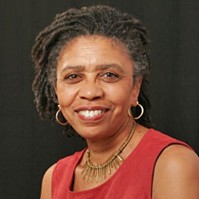
I joined the Design and Environmental Analysis faculty in 1993 as my first full time academic appointment. My first graduate degree was in city and regional planning. I worked as city planner for a large city in New Jersey and as a facility planner and programmer for an architectural firm in New York City. My PhD is in psychology, specifically environmental psychology. My research interests have always been, and continue to be, related to the ways in which the physical environment relates to children's and adolescents' development, behavior, and well being. Noise and crowding are of particular interest to me, especially when children are exposed to these potential sources of stress in more than one setting as well as the role of the environment in children's development of competency and self-efficacy and self-esteem.
More recently my research interests include the role of the physical environment of home, school, and neighborhood in the development of identity, self-esteem, and self-efficacy in children and adolescents. My initial appointment at Cornell included responsibilities in Cooperative Extension. My primary program was to work with the child care industry in New York State providing training and educational materials for child care providers and parents. As of the spring semester 2005 my appointment was changed to research and teaching. I teach the department's programming methods in design course (DEA 4590/6500) as well as DEA 4100 Diversity and Facility Design. I also teach a graduate course, DEA 6200, Studies in Human-Environment Relations. |
Selected Publications:
Maxwell, L.E. & Schechtman, S. L. (2012). The role of objective and perceived school building qaulity in student academic outcomes and self-perception. Children, Youth and Environments, 22, 23-51.
Sepanski, S. Evans, G.W., Barry, R.L., Maxwell, L.E. (2010). An ecological perspective on cumulative school and neighborhood risk factors related to academic achievement. Journal of Applied Developmental Psychology, 31, 422-427.
Maxwell, L. E. (2009). Chaos outside the home: The school environment (pp.83-96). In G.W. Evans & T.D. Wachs (Eds). Chaos and its influence on children's development: An ecological perspective. Washington DC: American Psychological Association.
Maxwell, L.E., Mitchell, M.R., & Evans, G.W. (2008). Effects of play equipment and loose parts on preschool children’s outdoor play behavior: An observational study and design intervention. Children, Youth and Environments, 18 (2), 37-63.
Maxwell, L.E. & Chmielewski, E. J. (2008). Environmental personalization and elementary school children’s self-esteem. Journal of Environmental Psychology, 28, 143-153.
Maxwell, L.E. (2007). Competency in child care settings: The role of the physical environment. Environment and Behavior, 39(2), 229-245.
Maxwell, L.E. (2007). Preschool and day care environments. In R. Lueder & V. Rice (Eds). Child Ergonomics (pp. 653-688). New York: Taylor and Francis.
Maxwell, L.E. (2006). Crowding, class size, and school size. In H. Frumkin, R. Geller, I. L. Rubin, & J. Nodvin (Eds.), Safe and Healthy School Environments (pp. 13-19). Oxford, UK: Oxford University Press.
Maxwell, L.E. (2006). Noise. In H. Frumkin, R. Geller, I.L. Rubin, & J. Nodvin (Eds.), Safe and Healthy School Environments (pp. 34-45). Oxford, UK: Oxford University Press.
Laquatra, J., Maxwell. L.E. & Pierce, M. (2005). Indoor air pollutants: Limited-resource households and childcare facilities. Journal of Environmental Health, 67(7), 39-43
Miller, A.S. & Maxwell, L.E. (2003). Exploring the role of home design in fostering family interaction: The use of programming methods in research. Journal of Interior Design, 29, 50-65.
Maxwell, L.E. (2003). Home and School density effects on elementary school children. Environmental Behavior, 35(4), 566-578
Maxwell, L.E. & Killeen, J.P. (2002). Museum Visits: Experiences of special education and typically developing children. Journal of Museum Education, 27 (1), 18-21.
Maxwell, Lorraine & Evans, G.W. (2000). The effects of noise on preschool children's prereading skills. Journal of Environmental Psychology, 20, 91-97.
Evans, G.W., Maxwell, Lorraine, & Hart, B. (1999). Parental language and verbal responsiveness to children in crowded homes. Developmental Psychology, 35(4), 1020-1023.
Maxwell, Lorraine (1998). Designing childcare settings: A child centered approach. Ithaca, NY: Cornell Cooperative Extension.
Maxwell, L.E. (1996). Multiple effects of home and daycare crowding. Environment & Behavior, 28 (4), 494-511
|